
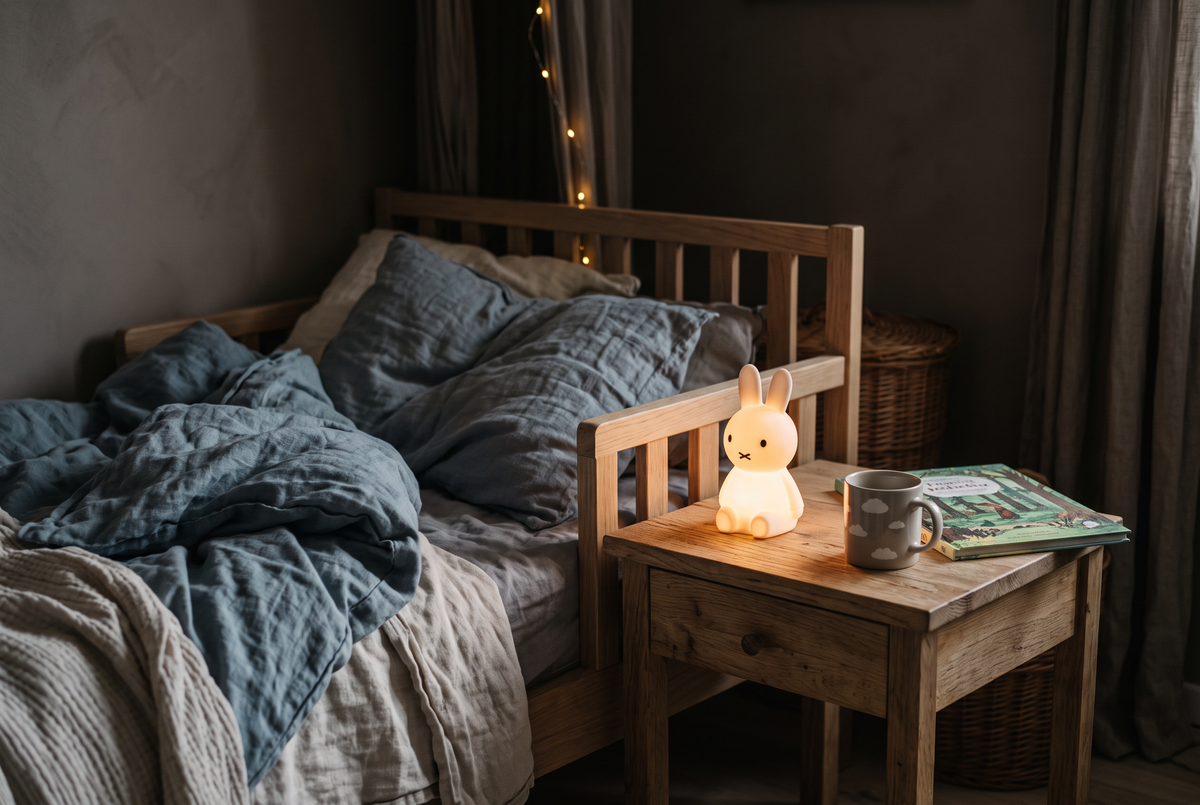
It's just before midnight when a bloodcurdling scream comes from the children's room: The child sits upright in bed, eyes wide open, drenched in sweat, flailing about and seemingly not recognizing their own parents. After 5 to 15 minutes, the episode is over – the child continues to sleep as if nothing happened, remembering nothing in the morning. What parents perceive as a traumatic experience is usually medically a night terror, technically known as Pavor Nocturnus. Approximately one in three to five children experiences at least one such episode between the ages of 2 and 7; significantly fewer are regularly affected. The most important message upfront: Night terrors are not a mental disorder, not a sign of trauma, and not distressing for the child itself – they sleep throughout the entire episode. This guide explains what happens in the brain, how to react correctly in the moment, and what measures you can take to reduce their frequency.
The short answer: Night terrors are a harmless arousal disorder from deep sleep, typically occurring within the first 1 to 3 hours after falling asleep. The child is asleep during this time – do not wake them or hold them down. Stay calmly nearby, secure the environment, and wait out the episode; it will end on its own after 5 to 15 minutes. Prevention primarily involves sufficient sleep and regular bedtimes, as overtiredness is the most common trigger.
- Night terrors occur during the transition from deep sleep – usually 1 to 3 hours after falling asleep, in contrast to nightmares which occur in the second half of the night.
- The child is not awake, does not recognize anyone, and remembers nothing in the morning – the episode is distressing for the parents, not for the child.
- The correct reaction is: do not wake, do not hold down, stay calmly nearby, and remove any potential hazards.
- Most common triggers: overtiredness, irregular bedtimes, fever, very exciting or overstimulating days – this is where prevention begins.
- Medical evaluation is advisable for episodes several times a week, onset after age 12, or suspicion of breathing pauses.
What happens in the brain during a night terror
Night terrors belong to the so-called parasomnias – disorders that arise during the transition between sleep stages. Children spend significantly more time in deep sleep than adults: In the first hours of the night, long deep sleep phases dominate, during which the brain hardly reacts to external stimuli. During the transition from this deep sleep to lighter phases, a partial arousal can occur: parts of the brain – especially motor and emotional centers – activate, while consciousness and memory remain asleep. The result: screaming, wide-open eyes, a racing heart of 120 to 170 beats per minute, sweating, and defensive movements – with a complete lack of responsiveness. Because the memory center remains offline, the child remembers nothing of the episode in the morning. This is precisely where the comfort lies: the dramatic image is deceptive. Children's nervous systems develop into a stable sleep architecture at different rates – with maturation, the episodes almost always disappear on their own, usually by school age. Learn more about the architecture of the night in the article on sleep stages.
Night terror or nightmare? The crucial difference
The confusion is common, but the reaction is fundamentally different – which is why a close look is worthwhile.
| Characteristic | Night Terror | Nightmare |
|---|---|---|
| Timing | First 1–3 hours after falling asleep | Second half of the night (REM sleep) |
| Child's state | Asleep, unresponsive, doesn't recognize anyone | Wakes up, responsive, seeks comfort |
| Morning memory | None | Often detailed |
| Duration | 5–15 minutes, ends abruptly | Short, but falling asleep afterwards is difficult |
| Correct reaction | Do not wake, secure, wait | Comfort, soothe, stay with them |
So, if your child wakes up crying and wants to cuddle, it was a nightmare – how to react then is shown in our article Understanding Nightmares. If they scream unresponsively with open eyes, it's almost always a night terror.

Reacting correctly: the 4-point plan for an acute episode
First: Stay calm and with the child. Your child is not suffering – they are sleeping. Take a deep breath and observe rather than intervene. Second: Do not wake them. Waking often prolongs the episode because the child wakes up confused and disoriented and then actually becomes scared. Speak softly and soothingly at most, without expecting answers. Third: Do not hold them down. Being held down is processed by the sleeping brain as a threat and intensifies the defense – this is where most scratches and bruises occur. Instead, protectively hold your hands nearby. Fourth: Secure the environment. Remove hard objects from the bed's edge, gently push the child away from the bed's edge, secure stairs with a gate and windows with child locks during repeated episodes – especially important if sleepwalking, which belongs to the same family of disorders, also occurs with night terrors (see Sleepwalking: Causes). After the episode: Cover the child, turn off the light, go back to bed yourself. Do not force a conversation in the morning – the child cannot remember and would only be unsettled.
Know the triggers and prevent them specifically
Night terror episodes become more frequent when deep sleep is particularly deep or fragmented. By far the most important factor is overtiredness: A child who chronically gets 30 to 60 minutes too little sleep falls into compensatorily deeper deep sleep – and precisely there, partial awakenings occur. Therefore, first check the amount of sleep using our overview of bedtimes by age and experimentally move bedtime forward by 30 minutes – for many children, this halves the episodes within two weeks. Other typical triggers: irregular bedtimes (weekends!), fever and infections, very exciting or overstimulating days, a full bladder, and a room that is too warm – ideal are 17 to 19 °C. A recurring pattern can also be used: If episodes almost always occur at the same time, targeted brief nudging 15 to 30 minutes before ("scheduled awakening") can interrupt the sleep cycle and prevent the episode – however, this method should only be used for a few weeks and for frequent episodes.
When to see the pediatrician?
Night terrors are usually harmless and disappear on their own over time. However, there are constellations that warrant investigation. These include: episodes several times a week for an extended period; first occurrence after age 12 or persistence into puberty; episodes lasting longer than 30 minutes; injuries or leaving the bed with a risk of falling; as well as signs of disturbed breathing – loud snoring, pauses in breathing, or mouth breathing, as untreated sleep apnea can promote parasomnias. Even if there are abnormalities during the day – severe fatigue, concentration problems, bedwetting after a previously dry phase – a conversation with the pediatrician is worthwhile. Keep a simple log for two weeks beforehand: bedtime, time and duration of episodes, and any specific events of the day. This usually allows for a quick assessment during the consultation as to whether everything is within limits – and for most families, this is exactly what is confirmed.

Get CHF 25 discount
Subscribe to newsletter and receive a one-time CHF 25 discount. ✓ 200 nights trial sleep ✓ 10 years warranty
Frequently Asked Questions about Night Terrors in Children
Are night terrors dangerous for my child?
No. Night terrors are a harmless developmental phenomenon of childhood sleep. The child sleeps during the episode, does not suffer, and does not remember it in the morning.
Should I wake my child during a night terror?
No. Waking often prolongs the episode and further confuses the child. Stay calmly nearby, secure the surroundings, and wait – the episode will end on its own after 5 to 15 minutes.
At what age do night terrors occur?
Most commonly between the ages of 2 and 7, peaking during preschool years. By school age, the episodes disappear completely in most children.
How can I tell the difference between a night terror and a nightmare?
During a night terror, the child is unresponsive, the episode occurs in the first hours of the night, and there is no memory of it. After a nightmare, the child is awake, seeks comfort, and can often recount what they dreamed.
What triggers a night terror?
The most common triggers are overtiredness, irregular bedtimes, fever, exciting days, and a room that is too warm. Moving bedtime forward by 30 minutes significantly reduces episodes for many children.
When should we seek medical advice?
For episodes several times a week, lasting over 30 minutes, occurring after age 12, risk of injury, or signs of snoring and breathing pauses. A two-week sleep log can help in assessing the situation during a consultation.
This article is for general information purposes only and does not replace medical advice.









Leave a comment
This site is protected by hCaptcha and the hCaptcha Privacy Policy and Terms of Service apply.